
Proven on two Penske facilities in Texas
Truck and fleet facilities that keep the fleet moving from day one
Service centers, maintenance shops, fuel islands, truck washes, and heavy-duty yards, planned around how tractors and trailers actually move through the site.
- 20-bay Penske service center west of Houston with a 140 FT wash and 8 acres of paving
- Five-bay Penske regional facility in Dallas-Fort Worth with fuel island, CNG sensing, and lifts
- Preconstruction that prices fueling, wash, and paving as their own tracks
A fleet facility is a machine for downtime
The purpose of a truck service facility is to get vehicles back on the road. Every design and construction decision either shortens that turnaround or lengthens it: how a tractor gets from the gate to a bay, how far it travels to fuel and wash, how many trucks can be staged without blocking each other, and whether the yard can take the loads for twenty years.
AP has delivered two Penske facilities in Texas, one a 20-bay service center west of Houston and one a compact regional rental and service facility in Dallas-Fort Worth. The operational lessons from both are in every fleet project we plan.
What owners of fleet facilities need from the builder
Circulation that works
Turning radii, queuing, staging, and one-way flow designed for the actual tractors and trailers that will use the site.
Systems that open on time
Fuel, DEF, CNG sensing, wash, lifts, and compressed air permitted, tested, and commissioned as their own schedule tracks.
Paving that lasts
Heavy-duty sections, prepared subgrade, and drainage treated as structural work, because the yard is the facility.
An opening date that holds
Long-lead equipment identified in estimating and released in time for the fleet to move in on schedule.
Flagship project
Penske Katy Service Center
30,000
Shop
20
Truck bays
140
Truck wash
8
Heavy-duty paving
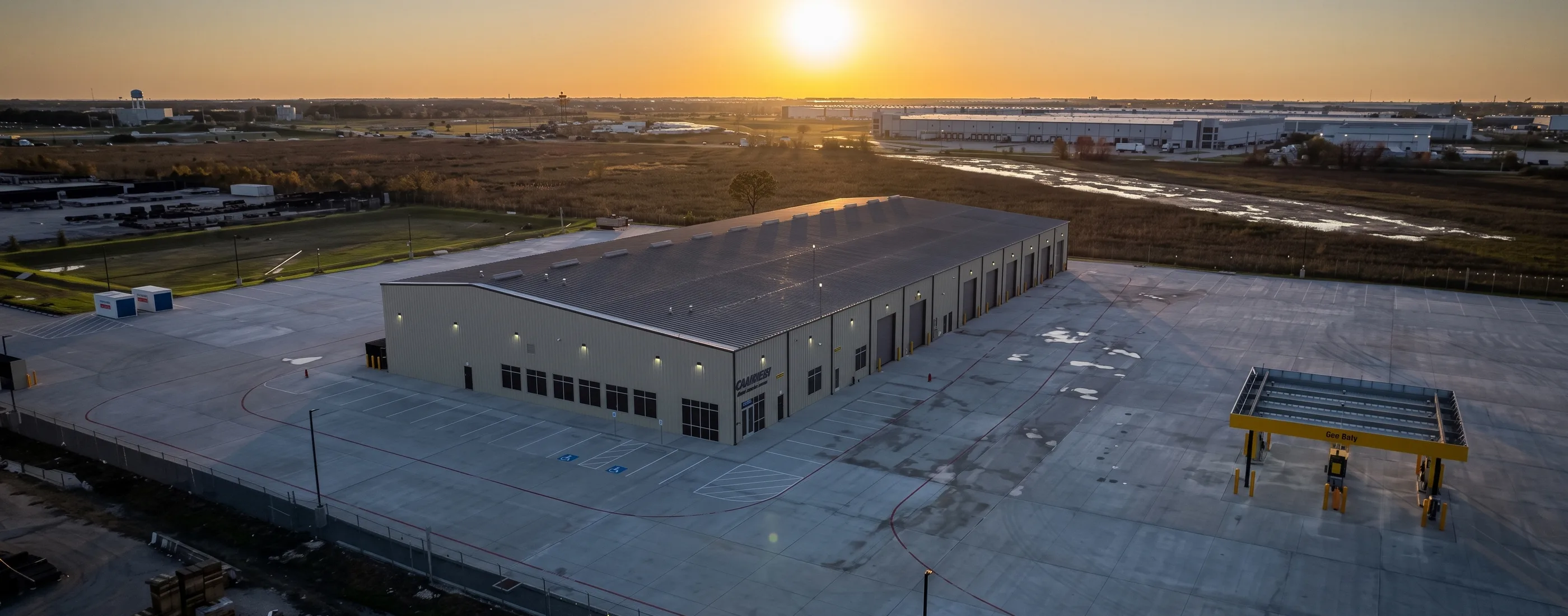
A 20-bay truck service facility with office and training space, a 140-foot truck wash, and eight acres of heavy-duty paving west of Houston.
Circulation and turning
Site planning for a fleet facility starts with the largest vehicle that will use it. A tractor-trailer needs far more room to turn, queue, and back than a delivery van, and a site that works on the first day is one where the turning templates were checked against the real equipment. We plan the gate, the check-in lane, the route to the bays, the fuel and wash approaches, and the staging areas as one loop, with employee and customer traffic separated from the trucks.
On the Penske Katy Service Center the paving covers eight acres around a 30,000 SF shop. That ratio is not unusual. The site carries the operation.
Bays, lifts, and shop systems
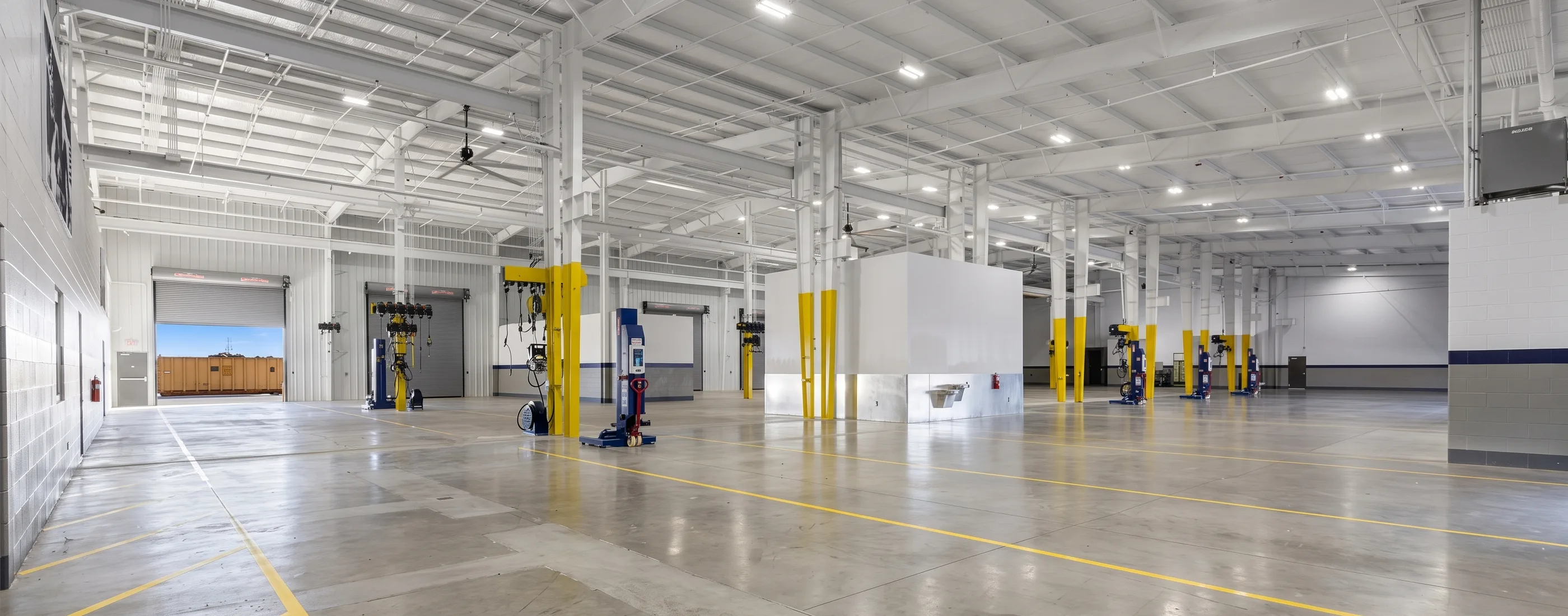
Bay count, bay depth, door height, and drive-through versus back-in each follow from the fleet and the work being done. Heavy lifts need pits or reinforced slabs and their own power. Tire handling, fluid distribution, exhaust extraction, compressed air, and lighting all route through the structure and have to be coordinated before the steel is detailed. The Penske Katy shop holds 20 truck bays; the Penske Dallas facility holds five bays with truck lifts and a tire carousel in 17,340 SF.
Fuel, DEF, and CNG
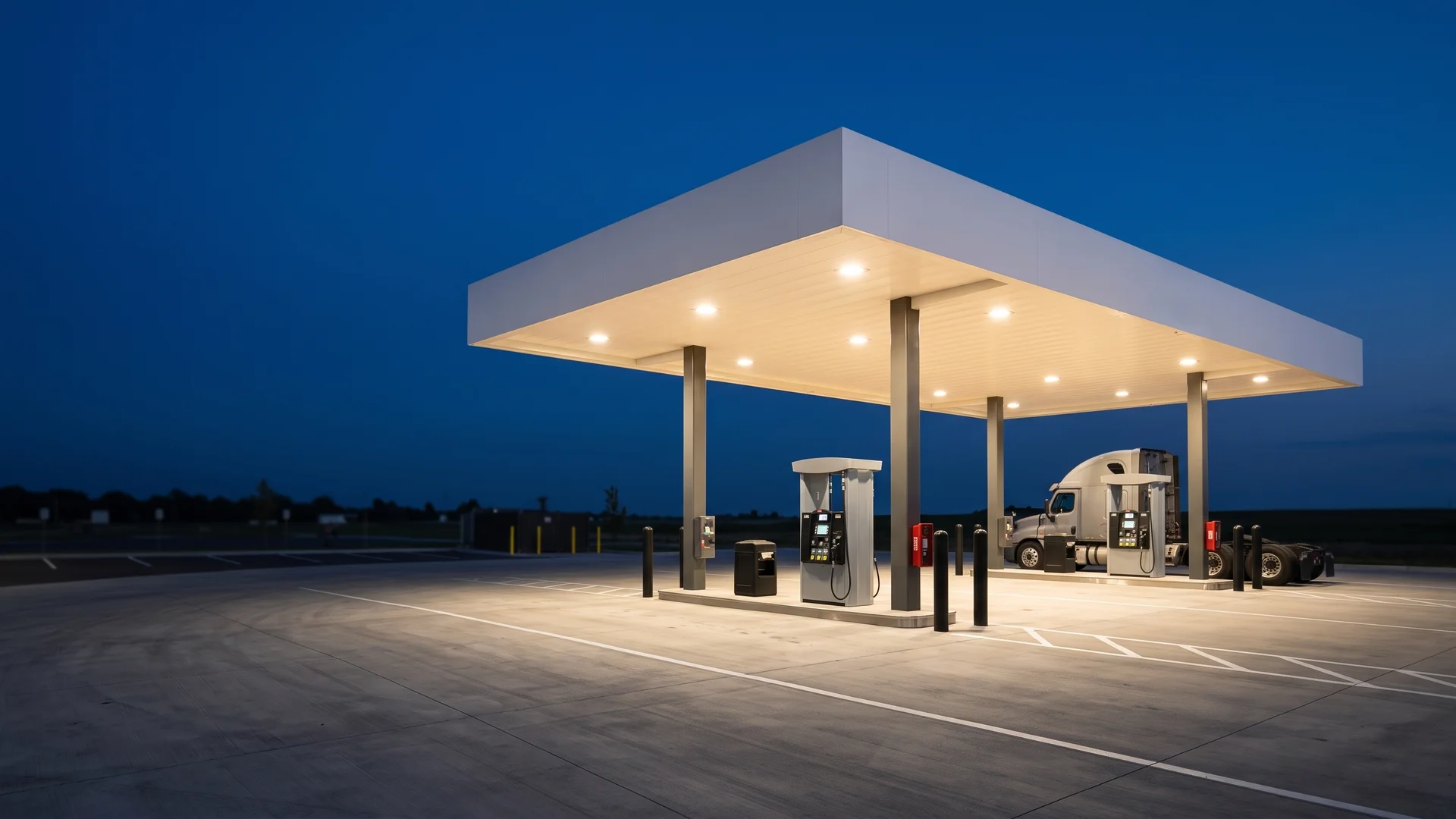
Fueling is a project within the project. Tank capacity, dispenser count, lane layout, containment, leak detection, and permitting are set with the specialty fuel contractor and the authorities early, because the tanks are often the first thing in the ground and the last thing certified. The Penske Dallas facility carries a two-lane fuel island with 20,000 gallons of diesel, 4,000 gallons of gasoline, and 2,000 gallons of DEF, plus CNG sensing in the shop. Each of those systems has its own inspection and commissioning path, and the schedule has to respect all of them.
Wash systems and water
A truck wash is a water and drainage problem first. Lane length and clearance for the largest vehicle, water recycling, oil and grit separation, discharge permits, and freeze protection are decided in preconstruction. The 140-foot wash at Penske Katy and the wash inside Penske Dallas were each planned with their equipment vendors so the building, the slab, and the utilities were ready for the system rather than adapted to it.
Heavy-duty paving
Yard paving is where a fleet facility earns its longevity. A section sized for the trucks, a subgrade prepared for repeated axle loads, and drainage that keeps water away from the slab will carry the fleet for decades. We design paving against the actual loads and turning movements, treat subgrade preparation and drainage as structural work, and place concrete in sequences that keep the site usable during construction.
Driver and staff space
A fleet facility also serves people. Rental and service lobbies, driver lounges, locker rooms, breakrooms, training rooms, and offices have to sit where they support the operation without putting pedestrians in the truck path. Penske Katy pairs its shop with 13,000 SF of office and training space. Penske Dallas fits rental and service lobbies, locker rooms, a driver lounge, and breakrooms into 2,863 SF of office.
Commissioning and opening
The facility opens when the systems are certified, so certification is planned as carefully as construction. Fuel, wash, lifts, air, and life-safety systems each need testing and sign-off, and staff need time on the equipment. AP builds the commissioning sequence into the master schedule so the opening date is a plan with steps behind it, and so a fleet that has to keep operating during construction can move in bay by bay if that is what the operation needs.
Second project
Penske Dallas Regional Facility
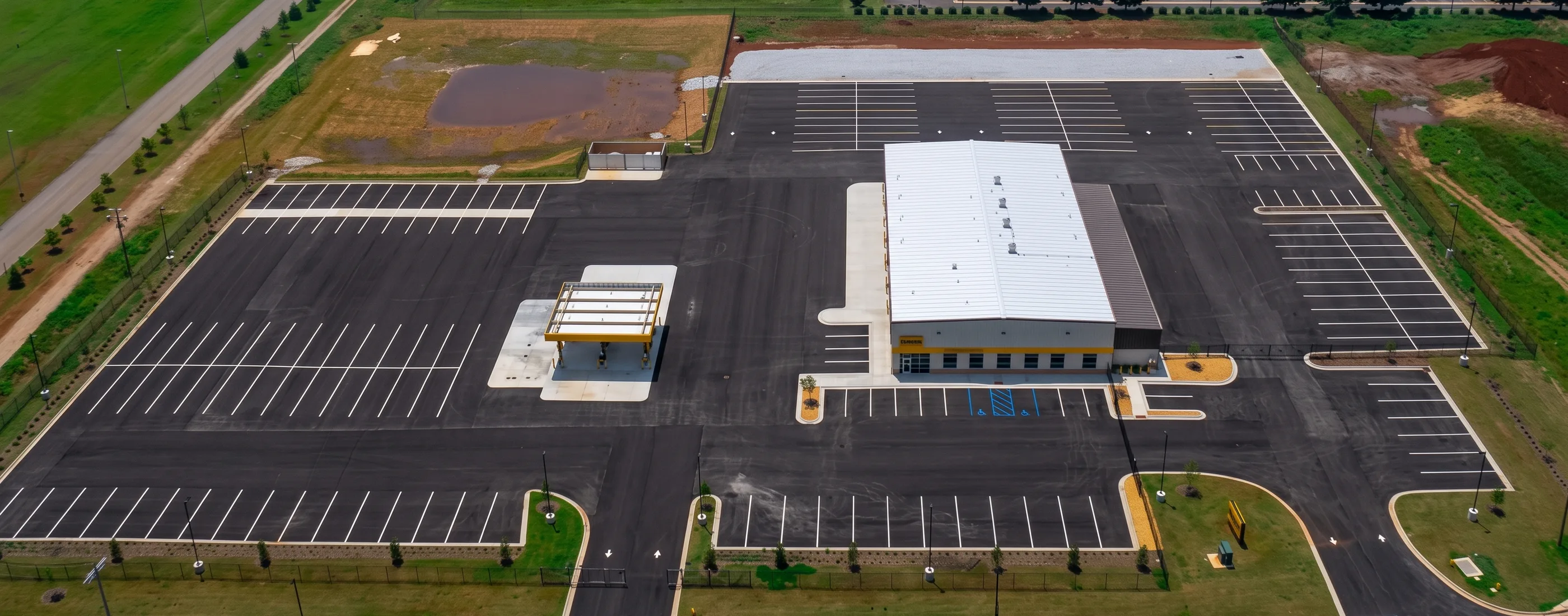
- A 17,340 SF regional truck facility with five bays, a two-lane fuel island, CNG sensing, a truck wash, tire carousel, and truck lifts, delivered on a pre-engineered metal building with split-face masonry.
- Fueling, CNG sensing, wash, lifts, and customer-facing space in one compact building, each with its own permitting and commissioning path, coordinated with a pre-engineered metal building and split-face masonry.
Delivery
How AP delivers a fleet facility
01
Program the operation
Fleet, vehicle types, bays, fueling, wash, driver program, and the date the facility has to open.
02
Plan the site
Circulation, staging, paving sections, drainage, and utilities resolved with the civil team before the building is fixed.
03
Buy the systems early
Fuel, wash, lifts, doors, and electrical gear identified as long-lead items and released to hold the schedule.
04
Commission and open
Each system tested and certified in sequence, with phasing if the fleet has to keep running during construction.
Truck and fleet facility questions
What truck and fleet facility experience does AP have?
AP delivered the Penske Katy Service Center, a 20-bay, 30,000 SF shop with a 140-foot truck wash and eight acres of heavy-duty paving, and the Penske Dallas regional facility, a five-bay building with a two-lane fuel island, CNG sensing, a truck wash, and lifts.
How much site does a truck service facility need?
More than the building suggests. Tractors and trailers need turning radii, queuing lanes, staging, and separation from employee parking, and the fuel and wash lanes need their own approach and exit. On the Penske Katy project the paving covered eight acres around a 30,000 SF shop.
Can AP build fuel islands and DEF systems?
Yes. The Penske Dallas facility includes a two-lane fuel island with 20,000 gallons of diesel, 4,000 gallons of gasoline, and 2,000 gallons of DEF. Fuel systems are coordinated with the specialty installers and permitted, tested, and commissioned as their own track in the schedule.
What is involved in a truck wash?
A wash is a building, a water system, and a drainage and treatment system in one. Lane length, drive-through height, water recycling, oil and grit separation, and discharge permits all have to be resolved early. AP has built a 140-foot wash at the Penske Katy Service Center and a wash inside the Penske Dallas facility.
Why does heavy-duty paving fail, and how is it avoided?
Paving lasts when the section is designed for the actual truck loads, the subgrade is prepared for them, and drainage keeps water away from the slab. We design paving sections against the real axle loads and turning movements, and we treat subgrade and drainage as structural work.
Can a fleet facility be built while the fleet keeps operating?
Often, with phasing. Preconstruction identifies which functions have to stay live, sequences the site so trucks keep moving, and sets a commissioning order so the new bays, fuel, or wash come online without stopping the operation.
What does AP need to price a fleet facility?
Fleet size and vehicle types, the number of bays and lifts, whether fueling, DEF, CNG, or wash are in scope, the office and driver program, the site, and the date the facility has to open. From that we can build a conceptual budget and a list of long-lead items.
Does AP build truck terminals and cross-docks as well as service facilities?
Yes. Terminals, cross-docks, and yards share the same site logic: circulation, paving, dock and door layout, lighting, security, and drainage. They are covered under warehouses and distribution as well, and AP delivers both.
Planning a truck or fleet facility?
Send us the fleet, the site, and the opening date. We will show you what the Penske projects taught us and what to settle first.