
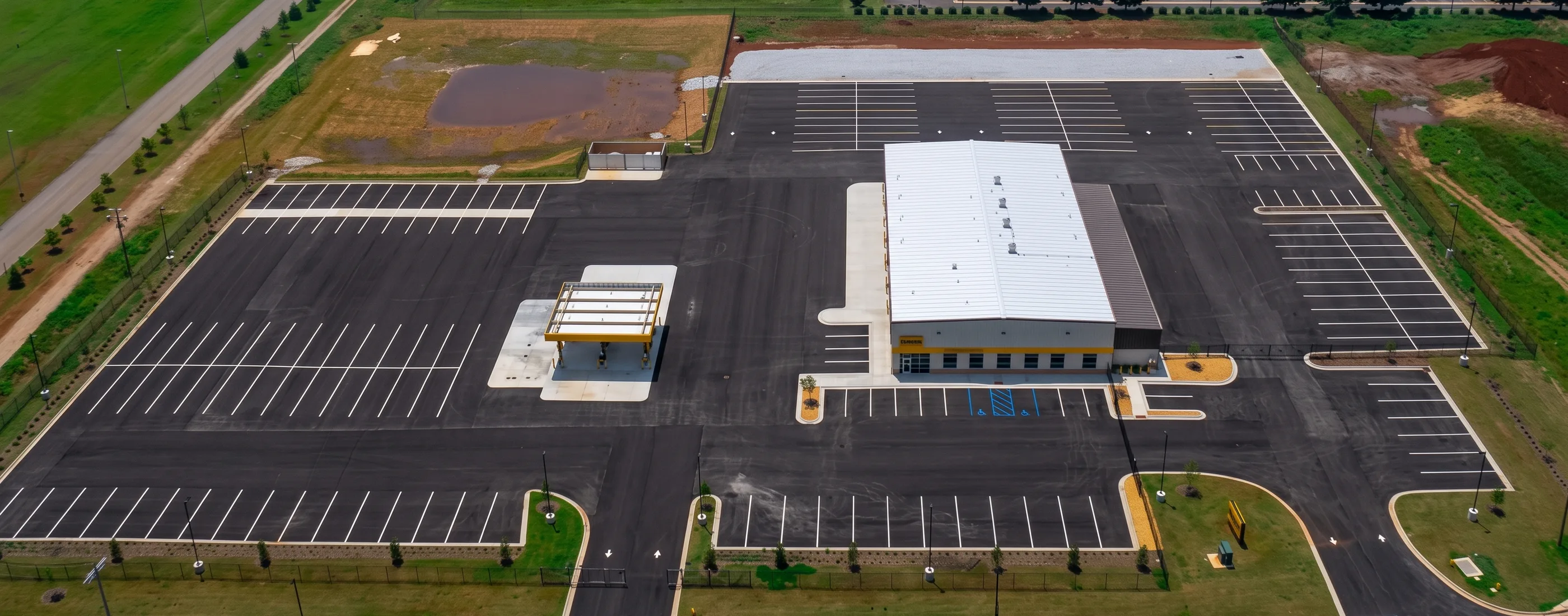
Penske Dallas, Regus, and Parry’s Pizza
Dallas-Fort Worth industrial and commercial construction
Fleet facilities, distribution centers, branches, and build-outs across the metroplex, with completed work across the metroplex.
- Penske Dallas: 17,340 SF, five bays, fuel island, CNG sensing, wash, and lifts
- Regus two-floor high-rise build-out and a 16-week retail build-out in the metroplex
- Bids leveled in BuildingConnected against the DFW trade market
The second market, with work already on the ground
Dallas-Fort Worth is AP’s second priority after Houston, with completed projects already in the market. The Penske Dallas regional truck facility put fueling, CNG sensing, a wash, and lifts into one compact building. The Regus build-out took two floors of a Dallas high-rise from shell to open-plan workplace with a two-story staircase. Parry’s Pizza, in the Dallas-Fort Worth suburbs, went from first-generation shell to opening in 16 weeks.
What the metroplex asks of a contractor is range and discipline. The same week can involve a truck yard on a freight corridor, a branch in a suburb with strict design review, and a build-out in a high-rise with loading-dock rules. AP brings one preconstruction and delivery system to all of them.
What DFW owners get from AP
Completed metroplex work
Fleet, workplace, and retail projects delivered across the metroplex, each with its own jurisdiction and schedule pressure.
DFW pricing
Trade bids from prequalified firms that work the metroplex, leveled in BuildingConnected on the full scope.
City-by-city permitting
The specific city or county path mapped for each parcel, with licensed consultants preparing submittals and AP sequencing them.
One accountable team
A Project Manager, Superintendent, and Project Coordinator on the job, with Houston leadership involved from preconstruction through turnover.
DFW project
Penske Dallas Regional Facility
17,340
Total facility
5
Service bays
20K
Diesel capacity
2,863
Office
A 17,340 SF regional truck facility with five bays, a two-lane fuel island, CNG sensing, a truck wash, tire carousel, and truck lifts, delivered on a pre-engineered metal building with split-face masonry.
Freight corridors and where facilities go
Industrial Dallas-Fort Worth is organized by its highways and its airports. Distribution and fleet users follow I-35W north through the Alliance corridor, I-20 and I-30 across the southern and eastern sides of the metroplex, I-45 toward Houston, and the roads around DFW Airport. Each corridor has its own mix of land, truck traffic, and neighboring uses, and that mix shapes the site plan before the building is drawn.
For a fleet or distribution facility that means the same questions AP works through everywhere: how tractors get in from the public road, where they queue and stage, how the yard drains, and whether the paving section matches the axle loads it will carry for the next twenty years. The Penske Dallas facility had to fit rental, fueling, wash, and service on a compact site, and circulation decided the layout.
A metroplex of jurisdictions
The metroplex is not one city. It is dozens of municipalities across several counties, and a site a few miles from another can sit under a different code adoption, a different fire marshal, a different drainage authority, and a different design review. Some suburbs enforce detailed exterior standards on commercial buildings. Others move fast on industrial permits but review site drainage closely. Unincorporated county parcels follow county and state rules with no city permit at all.
AP handles this as a preconstruction task. For each parcel we confirm the jurisdiction, list the approvals, identify who prepares each submittal, and put review durations into the master schedule. Civil engineers, architects, and other licensed consultants prepare the applications. AP coordinates the sequence and keeps it moving so the permit is ready when the site is.
How AP covers DFW from Houston
AP’s headquarters is in Houston, and Dallas-Fort Worth is served as a primary service area from that headquarters. In practice that changes less than owners expect. The Project Superintendent is on the site every day wherever the site is. The Project Manager and Project Coordinator run the schedule, submittals, and change control from the same system used on every AP project. Preconstruction and leadership travel to the metroplex for site walks, owner meetings, and the milestones that need them in the room.
Pricing is local. Subcontractors enter AP’s database through a prequalification process covering financial capacity, safety record, and relevant experience, and the database includes firms that work the metroplex. Bids are run and leveled in BuildingConnected so a DFW owner sees a DFW number on the full scope.
Fleet, retail, and workplace work
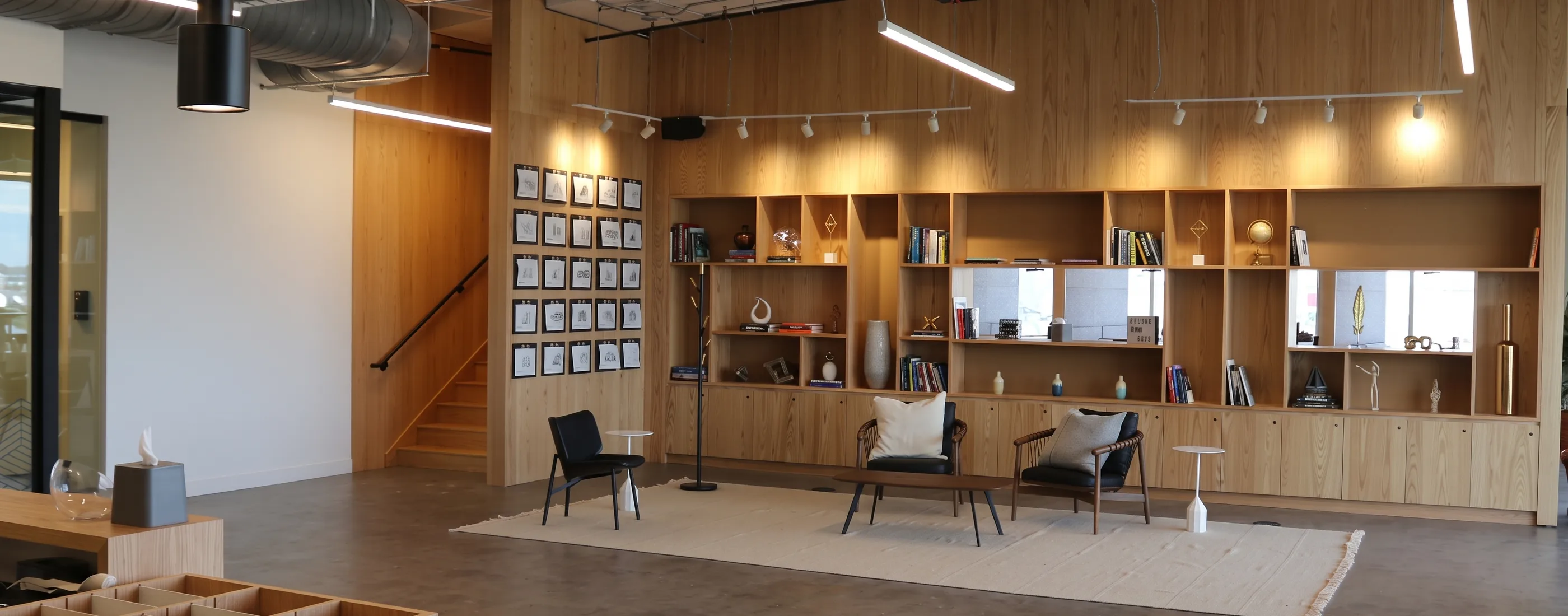
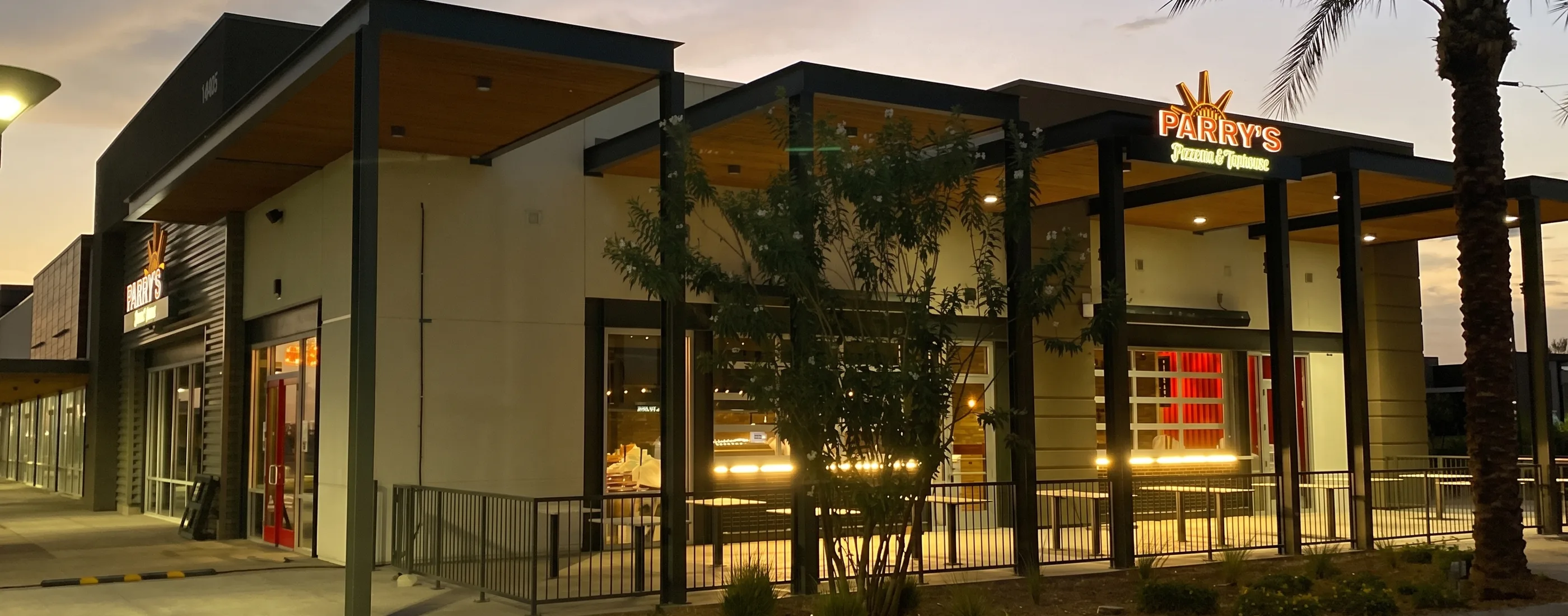
Three completed projects show the range. Penske Dallas is a 17,340 SF regional truck facility with five bays, a two-lane fuel island holding diesel, gasoline, and DEF, CNG sensing in the shop, a truck wash, a tire carousel, and truck lifts, on a pre-engineered metal building with split-face masonry. Regus is a two-floor first-generation build-out in a Dallas high-rise with a two-story statement staircase and an open-concept plan. Parry’s Pizza, in the Dallas-Fort Worth suburbs, is a first-generation shopping-center build-out finished on a 16-week schedule with an industrial warehouse design concept.
Those are three different owners, three different jurisdictions, and three different delivery pressures. The common thread is a schedule built in preconstruction and a team that stayed accountable to it.
Delivery in DFW
How a Dallas-Fort Worth project runs
01
Site and jurisdiction
The parcel, its city or county, drainage authority, and utility providers confirmed before pricing starts.
02
DFW pricing
Trade bids from prequalified metroplex subcontractors, leveled in BuildingConnected, with long-lead items flagged.
03
Staffed for the job
Superintendent on site daily, PM and Coordinator on the schedule, leadership at the milestones.
04
Open on the date
Commissioning, inspections, and turnover sequenced to the operational or opening date set in preconstruction.
Completed in Dallas-Fort Worth
All projectsPenske Dallas Regional Facility
Regus
Parry’s Pizza
Building in Dallas-Fort Worth: questions
What has AP Construction built in Dallas-Fort Worth?
The Penske Dallas regional truck facility, 17,340 SF with five bays, a two-lane fuel island, CNG sensing, a truck wash, and lifts; a two-floor first-generation Regus build-out in a Dallas high-rise; and a first-generation shopping-center build-out for Parry’s Pizza in the Dallas-Fort Worth area on a 16-week schedule.
Does AP have an office in Dallas?
No. AP is headquartered in Houston and serves Dallas-Fort Worth as a primary service area. Project teams are staffed for the job, the superintendent is on site daily, and preconstruction and leadership travel between Houston and the metroplex as the project requires.
Which DFW markets does AP pursue?
Truck and fleet facilities, distribution centers and warehouses, light industrial and manufacturing, bank branches, automotive service centers, retail build-outs, and substantial workplace projects. The metroplex has demand in all of them, and AP has completed fleet, retail, and workplace work there.
How does permitting differ across the metroplex?
Dallas-Fort Worth is dozens of cities plus several counties, and each city runs its own plan review, fire review, and inspection process. A site in Dallas, Fort Worth, a suburb, or an unincorporated county parcel will follow a different path. AP maps that path for the specific parcel in preconstruction.
Can AP price a DFW project against the local subcontractor market?
Yes. Bidding runs through BuildingConnected with trades from AP’s prequalified database, including firms that work the metroplex. Bids are leveled line by line so the owner sees Dallas-Fort Worth pricing on the full scope.
How fast can AP deliver a DFW build-out with a fixed opening date?
The Parry’s Pizza build-out in the metroplex ran on a 16-week schedule. Speed on a build-out comes from preconstruction: long-lead items released early, the landlord’s shell condition verified, and permits sequenced so the opening date is planned rather than hoped for.
Planning a facility in Dallas-Fort Worth?
Send us the site and the program. We will confirm the jurisdiction, price it against the metroplex trade market, and tell you what the schedule will demand.