
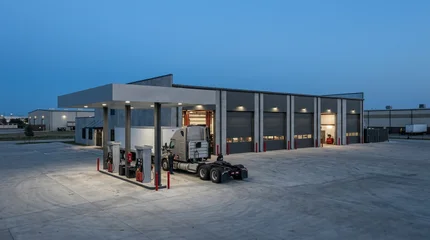
Bays, lifts, fuel, and wash, from fleet-facility work
Automotive service centers built around the bay, the lift, and the customer
Service centers, dealership service departments, quick-service and tire centers, and wash facilities, planned by a contractor that has built the same systems at truck scale.
- Lifts, fluid distribution, air, exhaust, and wash water planned before the slab
- Customer drive, lounge, and staff space separated from the shop floor
- Equipment lead times and commissioning sequenced to the opening date
A service center is a shop with a showroom in front of it
An automotive service center earns its keep in the bays. Every design and construction decision either shortens the time a vehicle spends on a lift or lengthens it: how the car gets from the drop-off lane to the bay, whether the lift, the fluids, the air, and the exhaust are where the technician needs them, how the wash bay drains, and whether the customer waiting in the lounge can see any of it.
AP has built those systems at truck scale on two Penske facilities in Texas: 20 bays, a 140 FT wash, and eight acres of paving west of Houston, and five bays with truck lifts, a tire carousel, a two-lane fuel island, and a wash in Dallas-Fort Worth. Lifts, fluid distribution, wash water, tire handling, fueling, and customer space are the same problems at a different size.
Automotive service and maintenance facilities are an emerging market for AP in Texas, Oklahoma, and Louisiana, for service brands, dealership groups, and franchise operators.
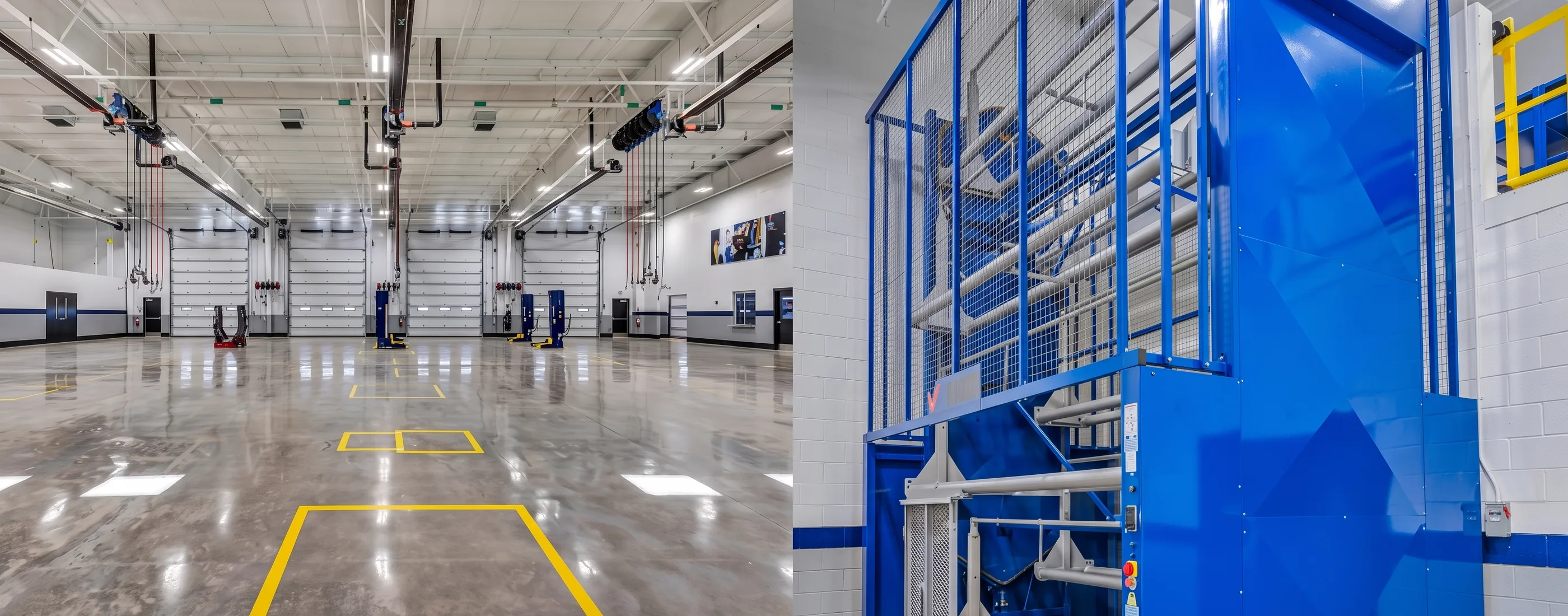
What service brands and dealer groups need from the builder
Bays that work from day one
Lift loads, pits, fluid reels, air drops, and exhaust extraction coordinated into the slab and structure before anything is poured.
Fluids and water handled
Bulk tanks, waste oil, containment, floor drains, separators, and wash reclaim planned with the vendor and the jurisdiction.
Customers kept out of the shop
Drop-off, service drive, write-up, lounge, and parking laid out apart from technician bays and vehicle staging.
An opening that holds
Lifts, compressors, wash equipment, and alignment racks bought early and commissioned ahead of the date.
Adjacent proof
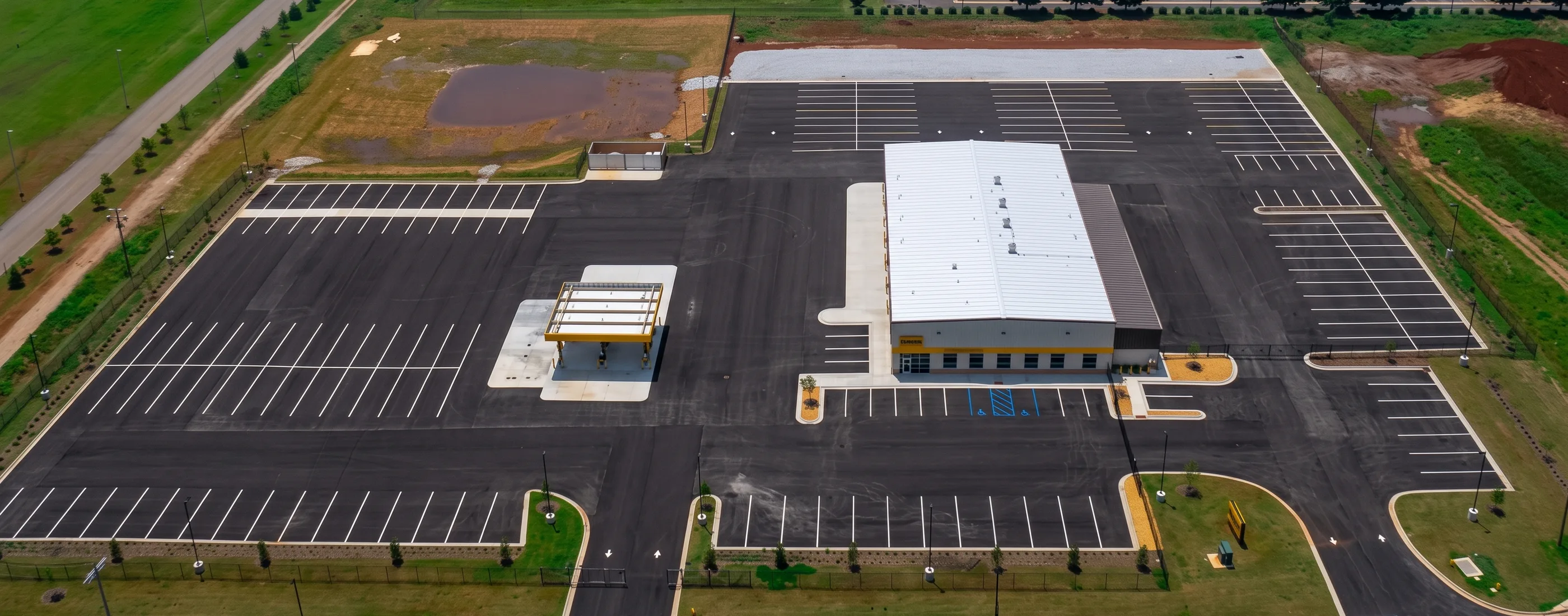
Penske Dallas Regional Facility
17,340
Total facility
5
Service bays
20K
Diesel capacity
2,863
Office
Five bays with truck lifts and a tire carousel, a two-lane fuel island, CNG sensing, a truck wash, and rental and service lobbies in one compact building. The systems a car service center needs, built for trucks.
Adjacent proof
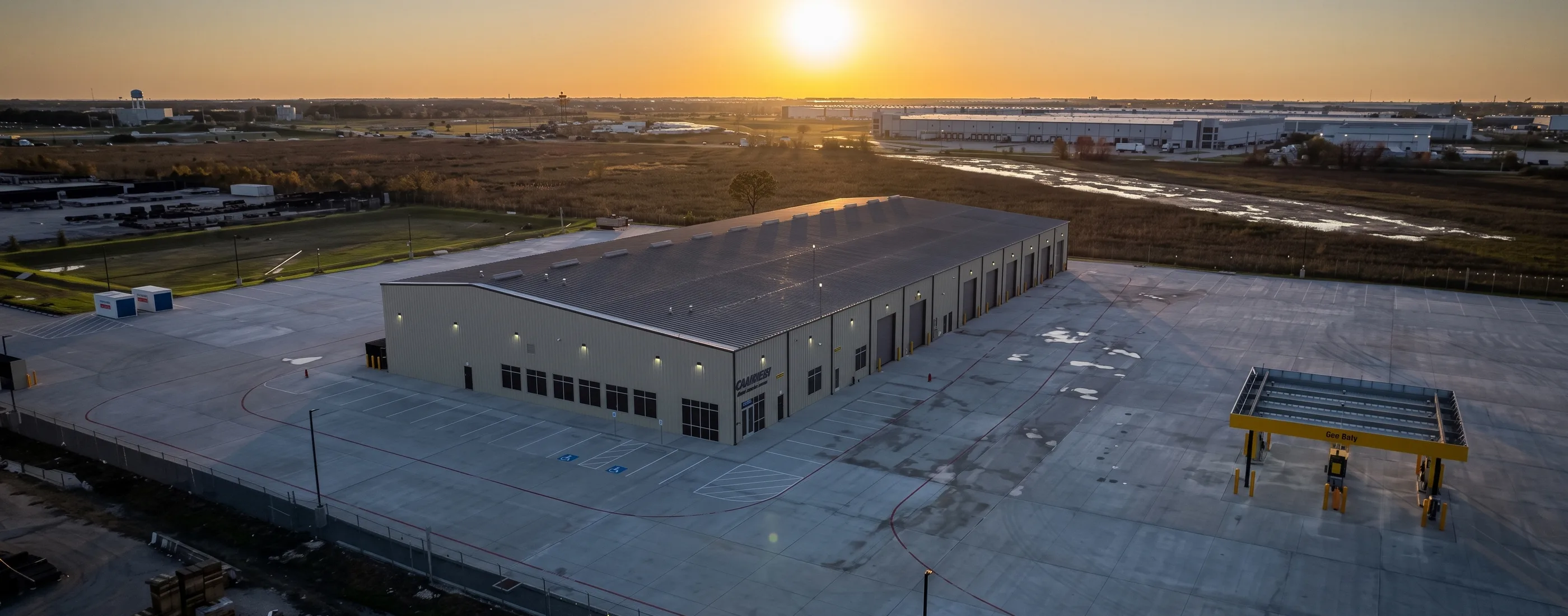
Penske Katy Service Center
- A 20-bay truck service facility with office and training space, a 140-foot truck wash, and eight acres of heavy-duty paving west of Houston.
- Twenty drive-through bays, a 140 FT wash, and 13,000 SF of office and training space around eight acres of paving. Bay spacing, door heights, wash drainage, and the separation of vehicle flow from people are the same decisions a service center or dealership service department makes at car scale.
Bays, lifts, and slab
Bay count, bay width and depth, door height, and drive-through versus back-in follow from the vehicles and the services offered. Every lift has published anchor loads and concrete requirements, and in-ground lifts need pits with waterproofing, drainage, and their own inspections. Alignment racks, tire machines, and brake lathes each want power and air in a specific place. AP coordinates the equipment vendor’s requirements into the slab and structural design before the slab is poured, because cutting a finished floor for a lift is the most expensive way to find out where it should have gone.
Fluid distribution and exhaust
Oil, coolant, transmission fluid, and washer fluid arrive in bulk and go to reels at each bay through a distribution system, and waste oil comes back the same way. Tanks, piping, containment, and monitoring are coordinated with the equipment vendor and the fire marshal. Compressed air runs alongside them, and vehicle exhaust extraction hangs from the structure above. All of it is routed before the walls and ceiling close, so the shop opens with the systems in the walls rather than on them.
Wash and detail bays
A wash bay is a water and drainage system first. Water reclaim or recycling, oil and grit separation, discharge permits, drive-through clearance, lighting, and freeze protection all have to be resolved in preconstruction with the wash equipment vendor and the utility. AP built a 140 FT truck wash at the Penske Katy Service Center and a wash inside the Penske Dallas facility, and plans car and light-truck washes and detail bays with the same discipline.
Tire handling and parts
Tires and parts take space and move constantly. Tire storage and carousels, the parts room and its counter to the shop, receiving doors, and the path from the delivery truck to the shelf all sit on the plan before the structure is fixed. The Dallas facility carries a tire carousel and truck lifts in 17,340 SF, and the same logic applies to a tire center or a dealership parts department.
Customer and staff space
The front of a service center sells the back. Customer drop-off, the service drive, write-up and advisor space, the lounge, restrooms, and parking are planned so a customer never walks through the shop, and technicians never cross a customer lane. Staff need lockers, break space, and training rooms placed where they support the work. Penske Katy pairs its shop with 13,000 SF of office and training; Penske Dallas fits rental and service lobbies, locker rooms, a driver lounge, and breakrooms into 2,863 SF.
Site, drives, and vehicle flow
Vehicle flow decides whether a service center feels fast or crowded. Entry and exit, the drop-off lane, customer parking, vehicle staging before and after service, the wash approach, and any fueling all have to work as one loop, with the shop doors placed so cars move in and out without blocking each other. Paving sections follow the vehicles and the delivery trucks that will use them, and drainage keeps the drives and the wash apron dry.
Equipment, commissioning, and opening
A service center opens when the equipment is installed, tested, and certified, so that sequence is planned into the schedule. Lifts, compressors, fluid systems, exhaust extraction, wash equipment, and alignment racks have lead times, installers, and inspections of their own. AP identifies them in preconstruction, releases them early, and sequences installation, commissioning, and staff time on the equipment ahead of the opening date so the first customer is served on the day it was planned.
Delivery
How AP delivers a service center
01
Program the shop
Vehicles, services, bay count, lifts, fluids, wash, customer program, and the opening date.
02
Plan the flow
Site loop, drop-off, staging, wash approach, and customer separation resolved before the building is fixed.
03
Buy the equipment early
Lifts, compressors, fluid systems, wash equipment, doors, and switchgear released to hold the schedule.
04
Commission and open
Each system installed, tested, and certified in sequence, with staff trained before the first customer arrives.
Automotive service center questions
What automotive facilities does AP build?
Automotive service centers, dealership service departments, quick-service and tire centers, and vehicle wash and detail facilities. The common thread is a building full of lifts, fluids, air, exhaust, and wash water that has to open on a date and serve vehicles from the first day.
How is a truck facility relevant to a car service center?
The systems are the same at a different scale. The Penske Dallas facility carries five bays, truck lifts, a tire carousel, a truck wash, and a two-lane fuel island; Penske Katy carries 20 bays and a 140 FT wash. Lifts, fluid distribution, wash water, tire handling, and customer space translate directly.
What does the slab need to carry for lifts?
Lift manufacturers publish anchor loads and concrete requirements, and in-ground lifts need pits with their own waterproofing and drainage. AP coordinates the lift vendor’s requirements into the slab design before it is poured, because cutting a finished slab for a lift is expensive and slow.
How are oil, coolant, and waste fluids handled?
Through a fluid distribution system: bulk tanks, piping to reels at each bay, waste oil collection, and containment, coordinated with the equipment vendor and the jurisdiction. Floor drains route through an oil and sand separator. AP plans the piping and containment before the slab and the walls close.
Can AP build a wash and detail bay?
Yes. A wash bay is a water and drainage system inside a building: water recycling or reclaim, oil and grit separation, discharge permits, drive-through height, and freeze protection. AP built a 140 FT truck wash at the Penske Katy Service Center and a wash inside the Penske Dallas facility, and plans car and light-truck washes the same way.
How does AP keep customers separate from the shop?
With the site plan and the building layout. Customer drop-off and parking, the service drive, the write-up area, and the lounge are planned apart from technician bays, parts, and vehicle staging, so customers never walk through a shop and technicians never cross a customer lane.
What holds the opening on a service center?
Equipment and its commissioning. Lifts, fluid systems, compressors, exhaust extraction, wash equipment, and alignment racks each have lead times, installers, and inspections. AP identifies them in preconstruction, releases them early, and sequences installation and certification ahead of the opening date.
Planning a service center?
Send us the vehicles, the services, the site, and the opening date. We will show you what the Penske facilities taught us about bays, fluids, and wash.