
A named PM, Superintendent, and Coordinator on every job
Construction management with a team you can name and a schedule you can see
From mobilization to turnover, one accountable project team runs the master schedule, the trades, safety, and every change, in the open with the owner and the design team.
- Project Manager, Superintendent, and Project Coordinator on every project
- Master schedule with long-lead milestones and three-week look-aheads
- Change control through observations, RFIs, pricing, and value engineering
What construction management means at AP
Construction management is the part of the project the owner cannot do from a desk. Once trades are on site, the questions come fast: a conflict in the drawings, a material that slipped, a jurisdiction that wants another inspection, a tenant date that moved. How those questions get answered decides whether the schedule and the budget from preconstruction survive.
AP answers them with a small, accountable team and a system the owner can watch. The Project Manager, Superintendent, and Project Coordinator are on the project from mobilization to turnover. The master schedule is the same one built in preconstruction. Every change is logged, priced, and shown with its schedule effect before anyone commits.
For owners, that means conversations that start with a plan.
What accountable execution changes for the owner
One team, start to finish
The people who mobilize are the people who turn over. Institutional knowledge stays on the project from preconstruction to turnover.
Slippage caught in days
Three-week look-aheads expose a late trade or a missing material while there is still time to act.
Changes with no surprises
Every change is priced, offset where value engineering allows, and shown with its schedule effect before the owner decides.
A facility that opens ready
Inspections, commissioning coordination, and training are scheduled work items, so turnover runs to plan.
The project team
Every AP project runs on the same structure. The Project Manager owns cost, contracts, procurement, and the relationship with the owner and the design team. The Project Superintendent owns the field: sequencing, trade coordination, safety, quality, and inspections. The Project Coordinator keeps the paper moving, from submittals and RFIs to meeting records and closeout documents.
Three roles is deliberate. It is enough to cover every part of the job without adding layers between the owner and the person who can answer the question. AP’s executives stay involved in operations, so escalation is a phone call.
Master schedule and three-week look-aheads
The master schedule is developed with the owner, the design team, and key vendors, and it carries the long-lead procurement milestones alongside construction. It is a working tool the whole team runs on. It is the plan the project team runs against, updated as the work progresses.
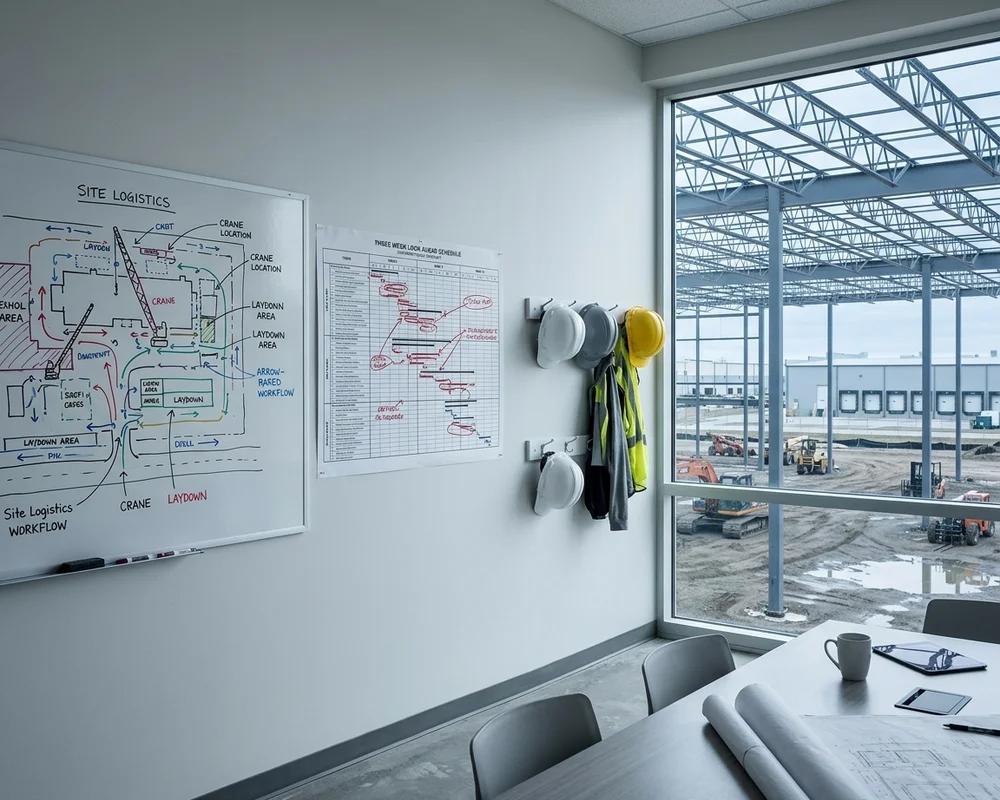
Under it, our superintendents use three-week look-ahead schedules. Each one breaks the coming weeks into trade-by-trade tasks with the crews, deliveries, and inspections they depend on. A look-ahead makes a late trade or a missing material visible before it reaches the critical path, and it gives every subcontractor the same picture of what happens next.
Subcontractor coordination
AP maintains an extensive prequalified subcontractor database. Firms enter it through a stringent prequalification process that looks at financial capacity, safety record, insurance, and relevant experience. Trades on an AP site have already been vetted before they are invited to bid.
On site, the Superintendent controls sequence, access, and laydown so each trade has clear space and a delay in one scope is absorbed before it reaches the next. Coordination meetings run off the look-ahead, and every trade leaves knowing what it owes and when.
Safety and quality management
AP uses a third-party safety-management firm to audit jobsites, so safety is checked by someone whose only job is to check it. Superintendents are required to hold OSHA 30 and CPR, First Aid, and AED credentials, plus the equipment and site-specific certifications the work calls for. The company runs monthly organizational safety training and weekly jobsite training, and individual hazard and refresher training as conditions change. Where an owner has its own safety program, it is built into the site plan.
Quality is managed the same way: in the field, in sequence, before the next trade covers the work. Slab flatness, tilt-wall panel alignment, roof details, and the systems the facility depends on are inspected as they are built.
Owner and design-team communication
Continuous communication between the client, the design team, and the project team is how problems stay small. The Project Manager runs regular owner meetings with the schedule, cost status, open RFIs, and pending decisions in one place. The design team is in the loop on every field question that touches the documents. All of it lives in Procore, so the current drawing, the open RFI, the submittal status, the daily log, and today’s photos are something the owner opens rather than something the owner is told. The owner always knows what is happening on the site.
The format and frequency of formal reporting are agreed with the owner at the start of the project, so the information arrives the way the owner’s organization needs it.
RFIs, submittals, and change management
Field questions become observations or RFIs and go to the design team with a proposed answer where AP has one. Submittals are tracked against the schedule so approvals and deliveries stay in step. Both are logged and visible to the owner.
When a change is needed, AP works it with the client rather than around the client. The change is priced from the same basis as the original estimate. Value engineering is applied to offset it where the operation allows. The schedule effect is calculated and minimized before the change is approved. The owner sees the full picture and decides.
Cost, schedule, and procurement tracking
Cost is tracked by trade against the buyout, with committed, pending, and forecast values so the owner can see where the project will land. Schedule is tracked against the master schedule and the look-aheads, with an AI-assisted review of the updated schedule for slipping dependencies and long-lead exposure. Procurement is tracked as its own register: every long-lead item with its release date, fabrication status, and delivery date, because a switchgear that ships late is a schedule problem long before it is a cost problem.
Inspections, closeout, and turnover
Turnover starts weeks before the last trade leaves. Jurisdiction inspections and certificates are sequenced into the schedule. Commissioning of building systems and specialty systems, such as fueling, wash, lifts, dock equipment, or process utilities, is coordinated with the vendors and the owner’s operating staff. Punch list is walked and closed. Closeout documents, warranties, and as-built information are handed over in order.
The result is a facility that opens on the planned date, with the owner’s people trained on the systems they are about to run.
Sequence
How AP runs construction
01
Mobilize
The project team is named, the buyout is complete, the master schedule is set, and the site plan and safety plan are in place.
02
Build
Three-week look-aheads drive the field. Trades are sequenced, inspected, and coordinated by the Superintendent.
03
Control
RFIs, submittals, changes, cost, and procurement are tracked and reviewed with the owner and the design team.
04
Turn over
Inspections, commissioning coordination, punch list, closeout, and training deliver a facility ready to operate.
Change control
How a field question becomes a decision
Observe
The Superintendent or a trade identifies the condition. It is logged as an observation or an RFI with photos, location, and the affected scope.
Collaborate
The design team answers the technical question. AP and the owner work the options together before anything is priced.
Price and offset
The change is priced from the estimate basis. Value engineering is applied where it can recover cost without touching the operation.
Minimize the schedule effect
The schedule impact is calculated, resequenced where possible, and shown to the owner alongside the cost before approval.
Relevant project
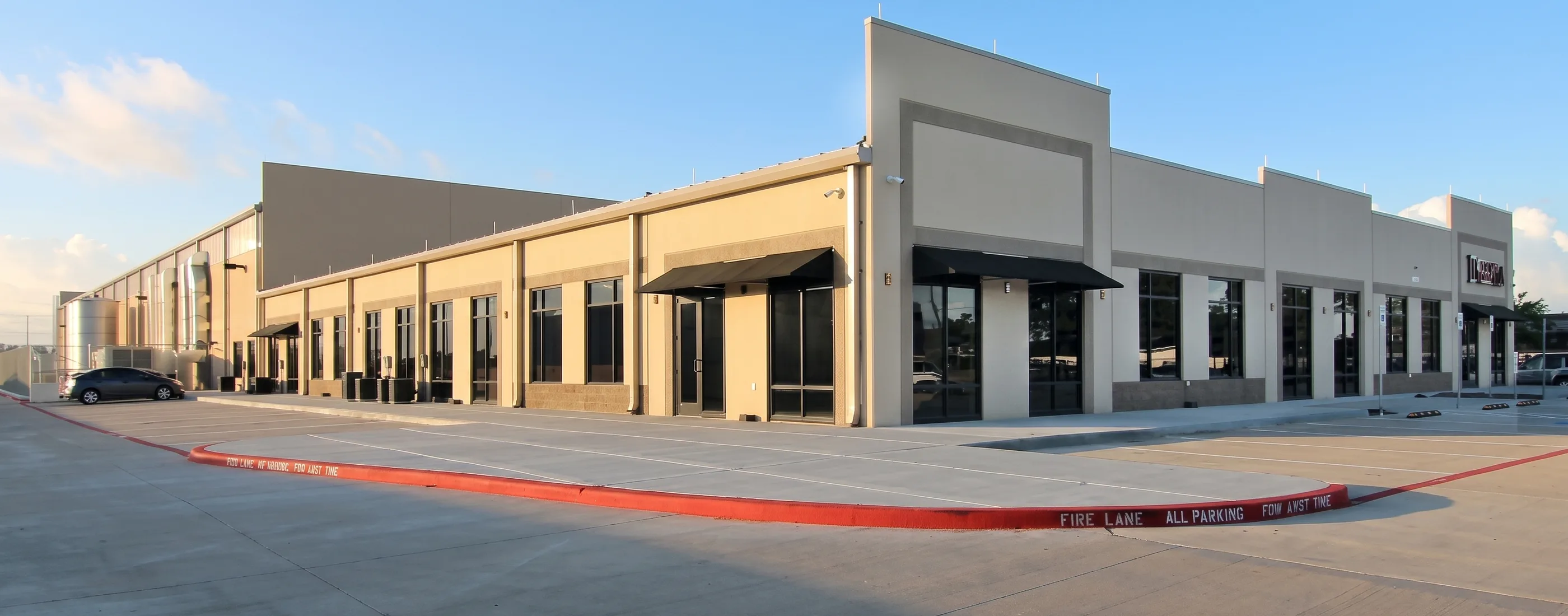
Dishaka Industrial Facility
- A 108,040 SF tilt-wall facility on nine acres in Stafford that puts 17,040 SF of office, 32,049 SF of production, and 58,951 SF of warehouse under one roof.
- Tilt-wall panel sequencing, office finishes, production utilities, and warehouse dock positions on one nine-acre site is a coordination problem before it is a construction problem. Three operations under one roof means three sets of trades that have to be sequenced so none of them waits on the others.
Construction management questions
Who will actually run my project day to day?
A named Project Manager, Project Superintendent, and Project Coordinator. The Project Manager owns cost, contracts, and the owner relationship. The Superintendent owns the field, the trades, and safety. The Coordinator keeps submittals, RFIs, and documentation moving. You know all three by name before mobilization.
How does AP keep the schedule honest once construction starts?
The master schedule built in preconstruction becomes the working plan. Our superintendents run three-week look-ahead schedules that break the next stretch of work into trade-by-trade tasks, so slippage shows up in days rather than months and the plan is corrected while it still can be.
What happens when a problem is found in the field?
It is logged as an observation or an RFI, sent to the design team, and worked with the owner in the open. If a change is needed, AP prices it, looks for value engineering that offsets it, and shows the schedule effect before anyone commits. The final invoice matches the story the reports told along the way.
How does AP choose and manage subcontractors?
Trades come from a prequalified subcontractor database. Each firm has passed a stringent prequalification covering financial capacity, safety record, and relevant experience. On site, the Superintendent coordinates sequence, access, and inspections so trades are not stacked on top of each other.
What safety requirements apply on an AP jobsite?
AP uses a third-party safety-management firm for jobsite audits. Superintendents hold OSHA 30 and CPR, First Aid, and AED credentials. The company runs monthly organizational safety training and weekly jobsite training, and individual hazard and refresher training on top of that. Client-specific programs are built in where required.
Can AP manage construction on a project it did not price?
Yes. AP can take on construction management for projects that were estimated elsewhere, though we will review the documents, the buyout, and the schedule first. Gaps we find are logged and priced before mobilization so every risk the owner carries has a name and a price.
What does turnover include?
Final inspections and certificates, commissioning coordination for building and specialty systems, punch list completion, closeout documents, warranties, as-built information, and training for the owner’s operating staff. The facility is turned over ready to operate.
Discuss construction management
Tell us the project, the stage it is in, and the date it has to operate. We will show you the team, the schedule system, and what it would take to get there.