
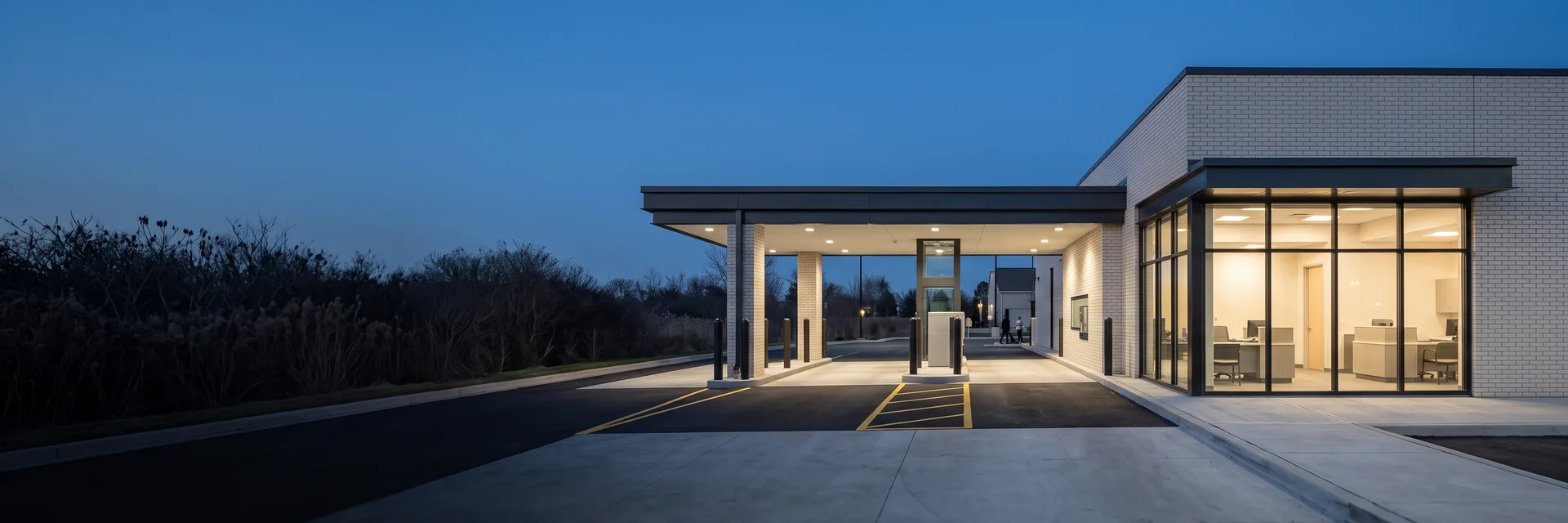
Security, open operations, and the opening date
Bank branches built around security, open operations, and the opening date
New branches, relocations, renovations, and rebrands for banks and credit unions, delivered by a contractor that plans the vault, the drive-up, and the customer floor as one job.
- Security, vault, and low-voltage vendors coordinated from rough-in to certification
- Phased work that keeps an occupied branch serving customers
- Prototype documents and brand standards carried across every location
A branch is a secure facility with a storefront
A bank branch has to do two opposite things well. It must feel open, welcoming, and on brand to the customer walking in, and it must be a hardened, certified, monitored facility behind that floor. The contractor who builds it has to carry both, and has to do so while the bank’s security consultant, alarm and camera vendors, and equipment suppliers each hold their own piece of the work.
AP has completed bank branch work for financial institutions, and we build branches the same way we build a fleet facility or a distribution center: by planning around how the building operates before anything is priced. That means the vault, the drive-up, the teller line, the technology, and the opening date drive the schedule.
Bank branches and financial facilities are one of AP’s priority markets in Texas, Oklahoma, and Louisiana.
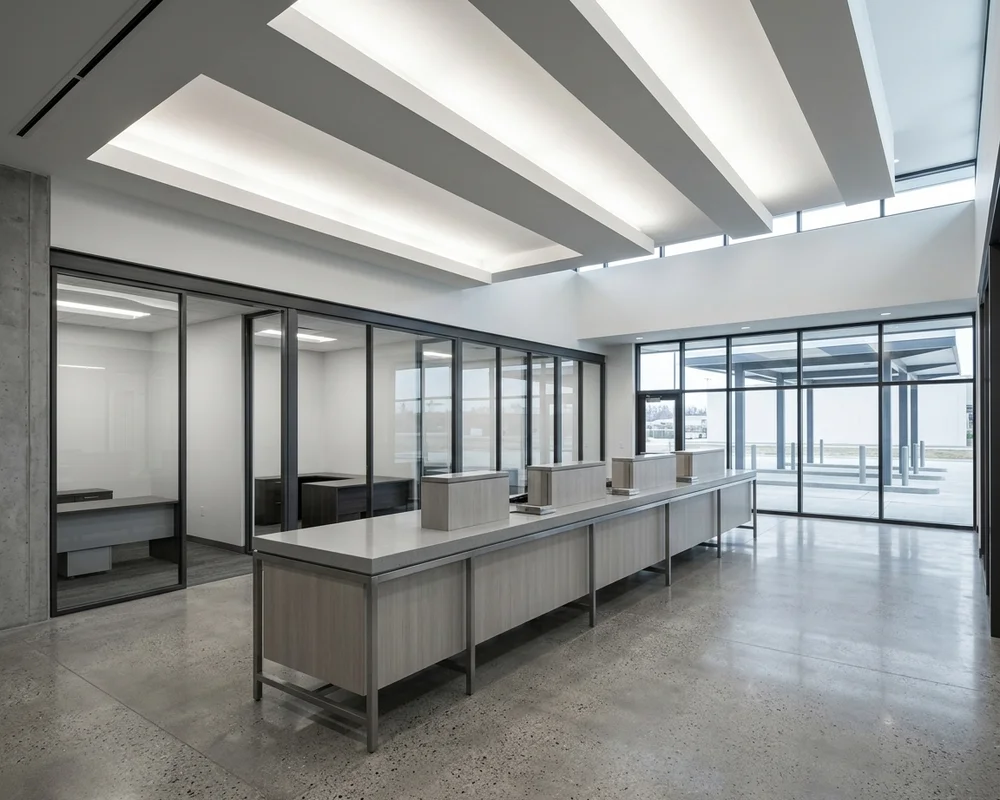
What bank real estate teams need from the builder
Secure areas done right
Vault, safe rooms, cash areas, and access control roughed in, backed, powered, and sequenced so the bank’s vendors can certify them before opening.
Customers keep banking
Renovations phased so the teller line, drive-up, and ATM stay in service, with after-hours work where noise, dust, or access require it.
Brand consistency
Prototype drawings, finish standards, signage, and millwork carried from one branch to the next without drift.
A date that holds
Vault doors, drive-up equipment, ATMs, millwork, and switchgear identified as long-lead items and released to protect the opening or rebrand date.
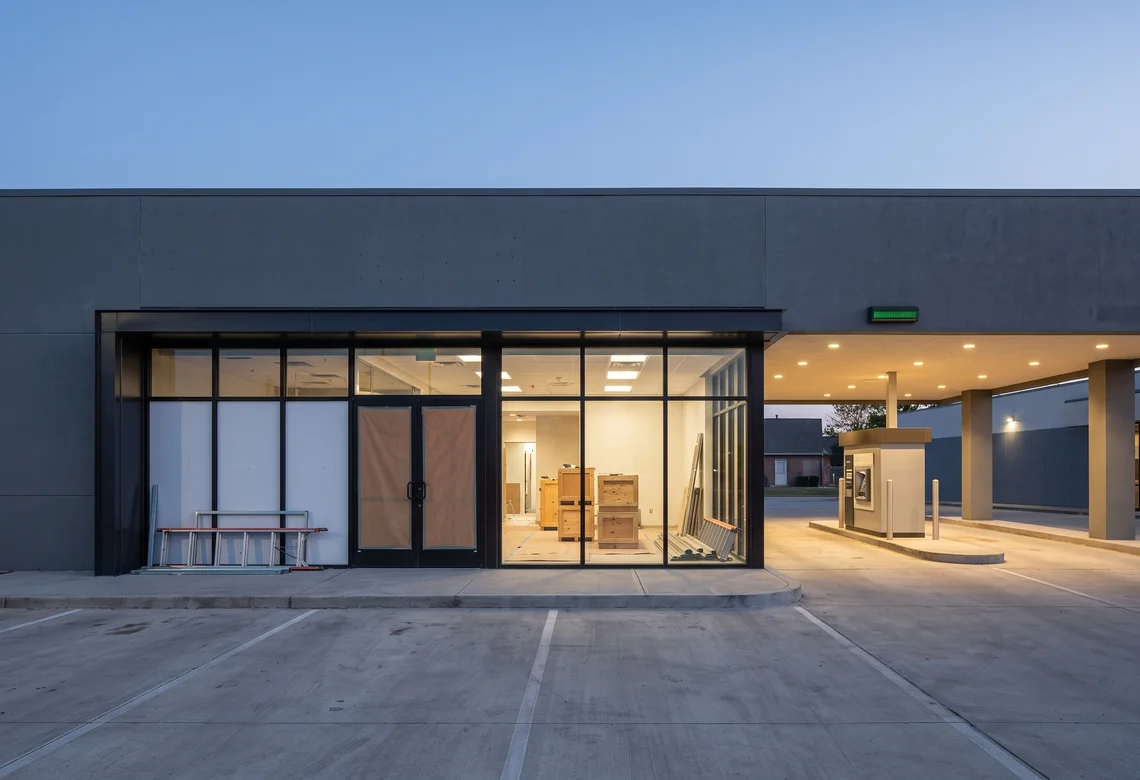
Relevant experience
How AP approaches branch work
- AP has completed bank branch construction for financial institutions in its service area. Project names, scopes, and results are being prepared for publication with client approval and will be added here.
- The same delivery system runs every AP project: preconstruction that resolves scope, cost, and long-lead items before the field; a Project Manager, Superintendent, and Project Coordinator accountable through turnover; and a master schedule with three-week look-aheads that the bank, the design team, and the security vendors all work from.
- The homepage build sequence walks through a full-gut branch renovation and rebrand phase by phase, from assessment through reopening. It is how AP thinks about an existing branch that has to come out of one brand and open in another.
Security and secure areas
Security coordination is the part of a branch project that cannot be caught up later. The vault, safe rooms, cash-handling areas, night depository, and secure corridors are designed with the bank’s security consultant and certified by its alarm, camera, and access-control vendors. AP’s job is to make sure the building is ready for them: structural backing and slab thickening for the vault, conduit and power for every device, door hardware and frames that match the access-control schedule, and a sequence that gets the secure areas inspected before the public floor is finished.
We hold a security coordination log from preconstruction onward, so every device location, rough-in, and responsible vendor is tracked against the drawings and the schedule.
Building in an open branch
Most renovations, expansions, and rebrands happen in branches that keep serving customers. That changes everything about how the work is planned. We divide the project into phases that keep the teller line, the drive-up, and the ATM operating, build temporary partitions and paths that protect customers and staff, and schedule demolition, coring, and anything dusty or loud for after hours. Every phase is agreed with the branch manager and the bank’s security team, because an open branch under construction is still a secure facility.
Brand standards and prototype documents
Banks invest heavily in prototype drawings, finish standards, millwork details, and signage packages. A branch that drifts from them costs the brand more than it saves. AP builds the scope, the estimate, and the submittal log from the prototype, so the finishes, lighting, millwork, and graphics are priced and checked against the standard on every location. Where a site forces a deviation, we flag it early and price the options.
Drive-up, ATM, and site
The drive-up and ATM are often the busiest parts of a branch and the ones with the most parties involved. Lane layout, queuing, canopy structure and lighting, pneumatic or video teller systems, ATM islands and enclosures, and the site drainage and paving all involve the civil engineer, the equipment vendor, the jurisdiction, and sometimes the landlord. We run them as one site track with its own permits, lead times, and inspections so the site opens with the building rather than weeks after it.
Technology and low voltage
A modern branch runs on cabling: data, telephony, cameras, alarm, access control, digital signage, video tellers, and interactive kiosks. Each system has its own vendor and its own rough-in needs. AP coordinates pathways, backboxes, power, and the order of installation so the bank’s technology vendors find their pathways ready. Low-voltage rough-in is planned with the security log, because the two overlap on almost every wall.
Opening and rebrand dates
Branch openings are announced, marketed, and staffed in advance, and a rebrand often has a systemwide date behind it. AP treats those dates as fixed. Vault doors, night depositories, drive-up equipment, ATM enclosures, millwork, signage, and switchgear are identified as long-lead items during preconstruction, and their release dates are built into the master schedule. Security certification, final inspections, and staff move-in are sequenced ahead of the public opening so the date holds without a rush at the end.
Rollouts across locations
For banks and credit unions with repeat branches, relocations, or a rebrand across many sites, the value is in consistency. AP applies one preconstruction and delivery system across the program: a shared scope and budget template from the first location, procurement that buys repeat items once, a submittal and finish log that carries forward, and reporting the bank’s real estate team can read across all locations. Each branch benefits from the last, and the program opens on schedule.
Delivery
How AP delivers a branch
01
Program the branch
Prototype, site, security requirements, occupied-operations plan, and the opening or rebrand date.
02
Coordinate the vendors
Security consultant, alarm and camera vendors, drive-up and ATM suppliers, and technology vendors mapped into one log and one schedule.
03
Buy the long-lead items
Vault doors, drive-up equipment, ATMs, millwork, signage, and switchgear released to hold the date.
04
Phase, certify, open
Work phased around customers, secure areas certified first, inspections and move-in sequenced before the public opening.
Bank branch construction questions
Has AP Construction built bank branches before?
Yes. AP has completed branch work for financial institutions, and project details are being prepared for publication with client approval. In the meantime, ask us directly and we will walk you through the scope, the phasing, and the security coordination on a call.
Can a branch stay open while it is renovated?
Usually, with phasing. We separate the work area from the public floor, keep the teller line, drive-up, and ATM operating in sequence, schedule noisy or dusty work after hours, and coordinate every shift with the branch manager and the bank’s security team so customers never see an unsecured space.
Who handles the vault and security systems?
The bank’s security consultant and its alarm, camera, and access-control vendors design and certify those systems. AP coordinates them: rough-in, conduit, power, backing, vault door delivery and setting, and the inspection sequence, so the secure areas are ready when the vendors arrive.
How does AP hold brand standards from branch to branch?
We start from the bank’s prototype documents and finish specifications, build a scope and budget template from the first location, and carry a submittal and finish log across the program. Each branch is priced and checked against the same standard, so the customer experience is consistent.
What drives the schedule on a branch project?
Long-lead items and sequencing. Vault doors, night depositories, drive-up equipment, ATM enclosures, millwork, signage, and switchgear all carry lead times. AP identifies them in preconstruction, releases them to hold the opening date, and sequences security certification before the public opening.
Does AP coordinate the drive-up lanes and ATM canopy?
Yes. Drive-up lanes, pneumatic or video teller systems, ATM islands, canopies, lighting, and queuing all sit on the site plan and involve the civil engineer, the equipment vendor, and the jurisdiction. AP coordinates them as one track so the site opens with the building.
Can AP run a multi-branch program or rebrand?
Yes. For repeat branches, relocations, or a systemwide rebrand, AP applies one preconstruction and delivery system across locations, with shared scope templates, procurement, and reporting. See the program management and rollouts service for how the system works across a portfolio.
Related
Services, markets, and places
Planning a branch, a relocation, or a rebrand?
Tell us the prototype, the site, and the date it has to open. We will show you how we phase, coordinate, and certify a branch.